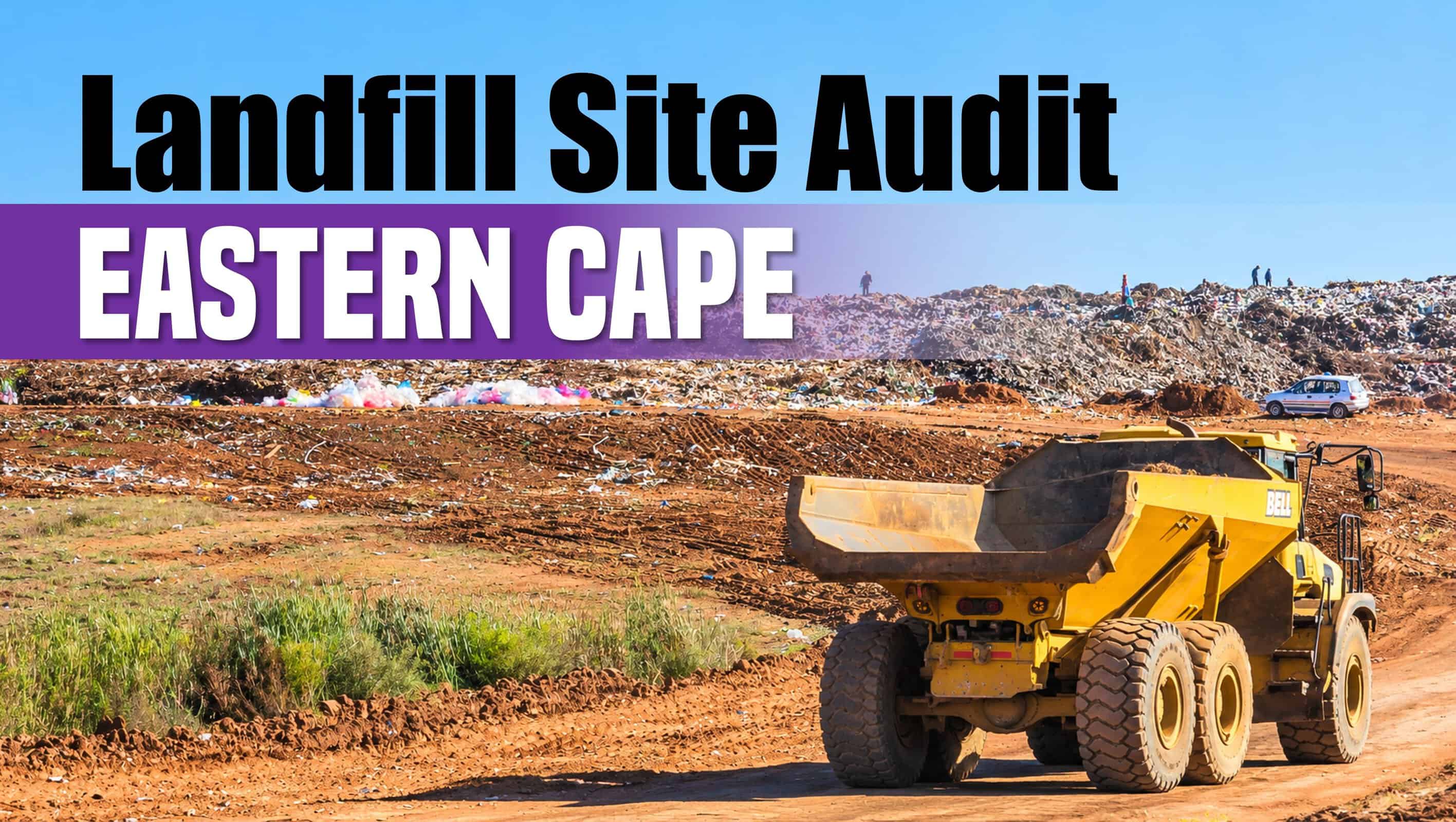
Not a single landfill site in the Nelson Mandela Bay Metro meets the required standards, while deterioration in the Kouga Municipality is accelerating – AfriForum audit
None of the five municipal landfill sites and transfer stations assessed by AfriForum this year as part of its landfill audit within the Nelson Mandela Bay Metropolitan Municipality, meet the minimum requirements for responsible waste management. Furthermore, these sites managed an average compliance score of barely 42%. In addition to the Metro’s poor performance, AfriForum’s audit also indicates that the deterioration of landfill sites in the neighbouring Kouga Local Municipality is now gaining momentum.
The Roundhill landfill site in KuGompo (formerly East London), located within the Buffalo City Metropolitan Municipality, is the only landfill site in the province to have passed this year’s audit. The site’s performance dipped slightly this year to an average compliance score of 96%, down from 100% the previous year. The improvement in the management of Roundhill is particularly noteworthy, considering that four years ago (in 2023) the site recorded a compliance score of only 64%. Management of the facility has improved significantly since then, and it now ranks among the top sites in the country.
However, Louis van der Vyver, AfriForum’s District Coordinator for the Eastern Cape, warns that the Roundhill site is the exception in this province. “One swallow does not make a summer – and this is especially true in the Eastern Cape. Despite Roundhill’s exceptional performance, the province only managed an average compliance score of 55%. If Roundhill were excluded, the other eight sites audited in the province would not even have managed a combined compliance score of 50%,” he explains.
Van der Vyver emphasises that the poor management of landfill sites in the Nelson Mandela Metro – the largest metro in the province and home to approximately 1,2 million people – is a particular cause for concern. The sites audited within this Metro include the Arlington landfill in Gqeberha (formerly Port Elizabeth), as well as the Gillespie, Rosedale, and Hillwacht transfer stations and the Koedoeskloof landfill in Kariega (formerly Uitenhage).
In the Kouga Municipality, the Hankey and Humansdorp landfill sites performed worse this year than in 2023. The Humansdorp site, which passed the audit last year, performed 15% worse this year, achieving a compliance score of only 68%.
AfriForum’s recently released landfill audit report further indicates that sites in the Eastern Cape achieved an average compliance score of only 55% this year, just slightly lower than KwaZulu-Natal, which recorded a compliance score of 56%. Landfill sites in the Western Cape and Gauteng performed the best this year, with the Western Cape achieving an average compliance score of 66%, while Gauteng recorded 64%.
This year, AfriForum audited 132 landfill sites and transfer stations across all nine provinces; however, only 30 sites (or 23% of the total) met at least 80% of the audit requirements. This suggests that, on average, approximately eight out of every ten sites nationwide exhibit serious shortcomings in infrastructure, operational management or compliance with basic requirements.
The following four sites failed to even reach an average compliance score of 50% (the compliance score is indicated in brackets):
- Hankey Landfill, Kouga Local Municipality (44)
- Arlington Landfill, Nelson Mandela Bay Metro (44)
- Hillwacht Transfer Station, Nelson Mandela Bay Metro (30)
- Koedoeskloof Landfill, Nelson Mandela Bay Metro (36)
“Effective waste management is non-negotiable and has a far-reaching impact on people and the environment. There is no longer time for excuses – the municipalities’ poor performance in this audit clearly indicates that we are heading toward a disaster,” concludes Van der Vyver.
Earlier this month, AfriForum submitted its report to the Department of Forestry, Fisheries and the Environment (DFFE) in Pretoria. In the meantime, the civil rights organisation will continue to monitor municipal landfills annually and engage with authorities, industry stakeholders and communities regarding practical solutions for the country’s waste management challenges. The organisation also encourages communities to become actively involved in responsible waste management, recycling and local initiatives aimed at reducing the volume of waste sent to landfills.