Tips to protect your home and family against El Niño veldfires
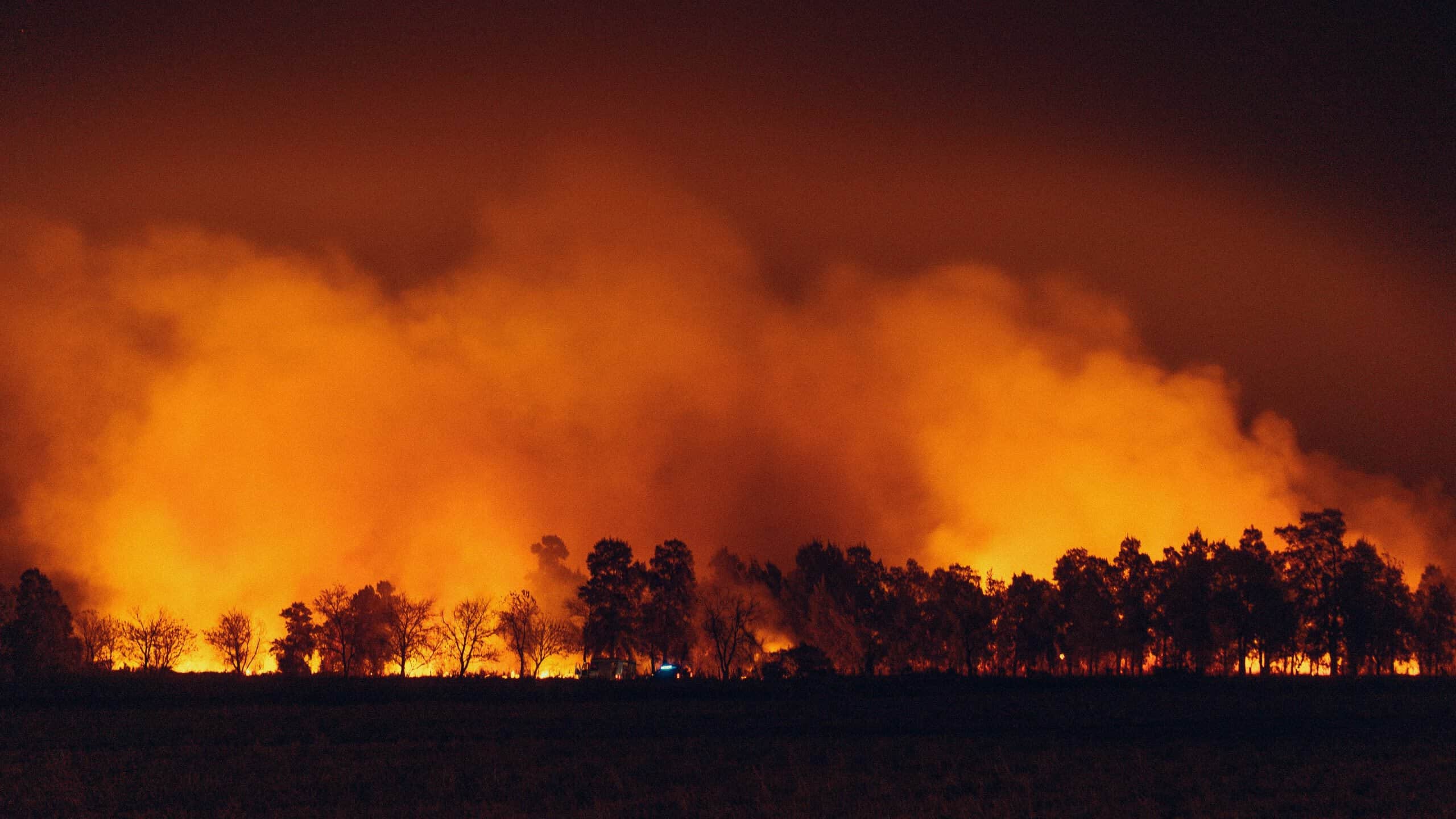
AfriForum calls on homeowners to start preparing their properties now and reduce their households’ exposure to veldfires. This follows the development of the so-called “Super El Niño” as summer and the veldfire season approach. Hot, dry, and windy conditions can increase the risk of veldfires when sufficient dry vegetation and other fuel are present.
AfriForum warns that the condition of a garden can play a significant role in how easily a veldfire reaches a home. Dry grass, dead branches, leaves, dense shrubs, and other combustible materials can increase the amount of available fuel around a house; therefore, preparation is one of the most important defensive measures at the disposal of – and under the control of – households.
“A veldfire is fast-moving, dangerous, and unpredictable. When strong winds and dry vegetation coincide, a fire can threaten a residential area within a very short time. Homeowners should therefore not wait until they see smoke before taking action. The time to prepare your home, garden, and family is before the fire breaks out,” says Tarien Cooks, a disaster management specialist at AfriForum.
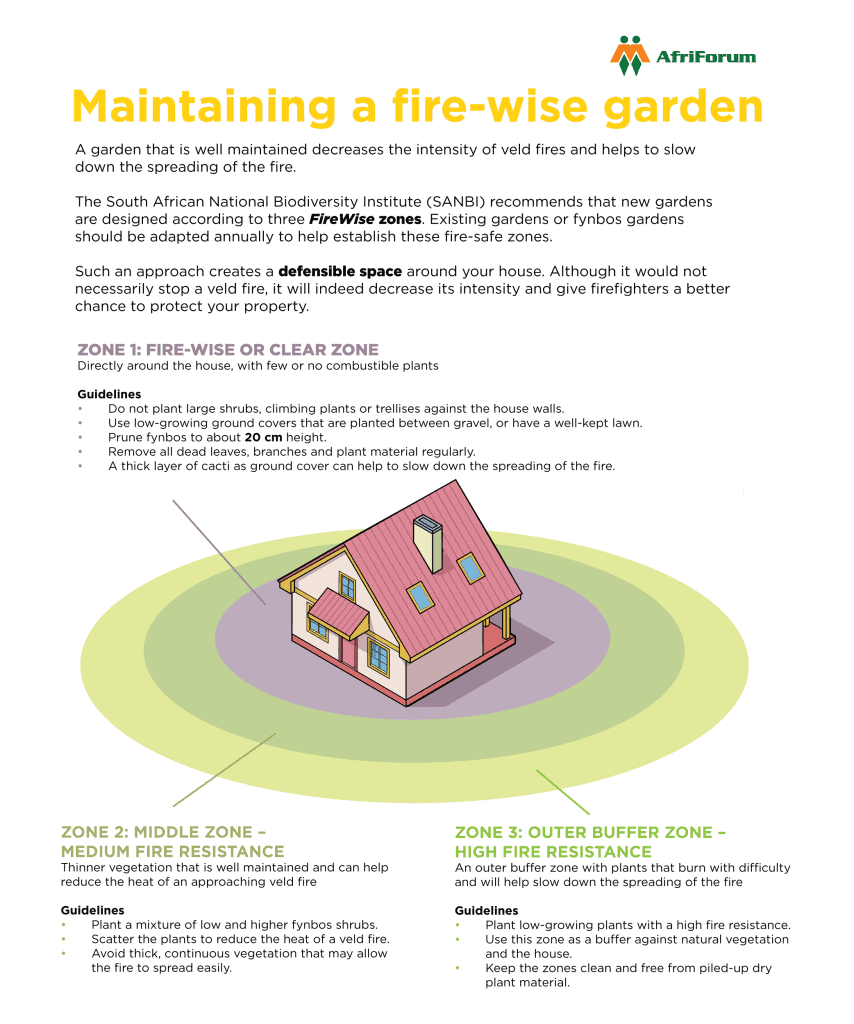
AfriForum’s tips for a fire-safe garden therefore aim to create a more defensible space around the home and help reduce the intensity and spread of an approaching fire. For instance, there should be little to no combustible vegetation directly around the house. Large shrubs, creepers, and trellises should not grow against exterior walls; fynbos should be pruned to a height of only about 20 cm; dead leaves, branches, and other plant material must be removed regularly; and a dense layer of succulents can be used as ground cover.
“The goal is not to remove every plant around your home. It is about managing your garden so that there is no continuous path of combustible material stretching from the veld right up to your house. Your garden should be part of your defense – not extra fuel for the fire,” says Cooks.
AfriForum has also compiled a practical self-assessment checklist regarding veldfire risks for homeowners. This enables residents to work systematically through their properties, identify risks, and take preventive measures.
The self-assessment considers, among other things, the property’s location, exposure to strong winds and natural veld, vegetation and fuel management, buildings and wooden structures, the storage of combustible materials, water supply and firefighting equipment, access for emergency services, and the household’s emergency planning.
Cooks emphasises that preparing for a veldfire is not just about protecting buildings and possessions. “Your first priority during an emergency is human life. A house can be replaced; a life cannot. Every family needs to know in advance what they will do, where they will go if they have to evacuate, what to take with them, and who is responsible for children, the elderly, and pets. Those decisions should not be made only when a fire is already approaching. Households should also keep the local fire department’s emergency number handy so that a veldfire can be reported as soon as possible.”
AfriForum’s self-assessment further enables homeowners to tally the number of risks identified. Properties with numerous risk-related findings require more urgent action, and the self-assessment recommends that homeowners with very high exposure take immediate steps and contact their local fire service or fire protection association for further advice.
“Don’t wait for the season’s first major veldfire before you start reducing your risk. Walk through your property this week. Check your grass, trees, gutters, firewood, water supply, and emergency service access. Then, draw up a plan and tackle the risks one by one. A few simple preventive steps today can help significantly limit the impact of a veldfire later,” concludes Cooks.