Pretoria water crisis: Metro shifts blame to residents, while millions of litres of water are lost – AfriForum
AfriForum maintains that the Tshwane Metropolitan Municipality lacks the capacity to manage the city’s water network effectively, stands by while millions of litres of drinking water are lost, and is now attempting to shift the blame for the ongoing water crisis onto the residents of Pretoria. This criticism comes in response to the Metro’s repeated statements over the past week, in which residents were urged to reduce water consumption to prevent the collapse of the Klapperkop and Garsfontein systems, alongside claims that the water shortages stem from “exceptionally high consumption.” In large parts of the city, residents have been without water for days or are struggling with extremely low water pressure.
Marais de Vaal, AfriForum’s Environmental Affairs Advisor, emphasises that the current water crisis can largely be attributed to the Metro’s incapacity and failure to carry out timely maintenance. He argues that the Metro’s own wastage of water is the single biggest reason for the shortages, and that the repair of water leaks is not being prioritised.
According to the latest available figures on the Metro’s own data portal, nearly 41% of all bulk water introduced into the Metro’s water supply system from various sources is lost and never reaches the consumer. Furthermore, according to a letter sent by AfriForum to the Metro on Friday, the current level of water loss is far above the Metro’s own stated target of 15%.
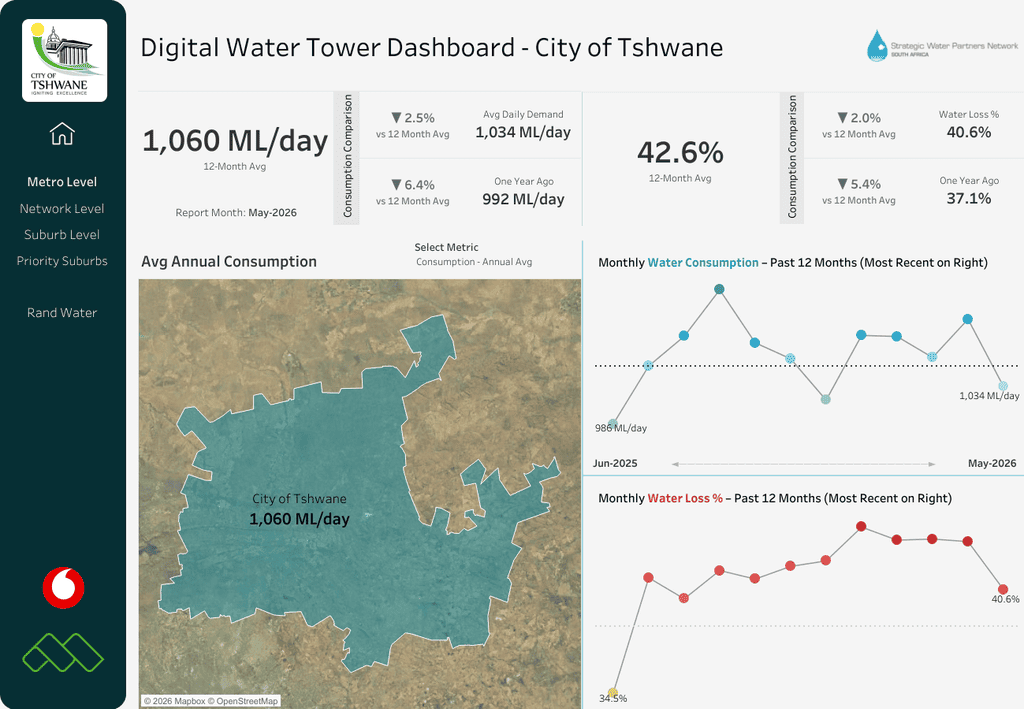
“Almost 41 litres out of every 100 litres of drinking water received by the Metro flows down the city’s roads, ends up in gullies, or simply seeps away into the ground. It never even gets close to the taps of residents who are supposedly wasting water,” De Vaal asserts. “While residents should always use water responsibly, the root cause of water shortages lies far more with the Metro, and these shortages will persist for as long as maintenance is neglected.”
In its letter to the Metro, AfriForum demands answers regarding the current water supply and water quality issues reported in Pretoria and Bronkhorstspruit. Among other things, AfriForum demands:
- information regarding billed water consumption in the city, along with evidence confirming that consumption is indeed higher than what is typical for this time of year;
- a comparative breakdown of actual public water consumption versus physical losses, commercial losses, and unauthorised use;
- the extent of water losses resulting from the recent leak at the Garsfontein reservoir, as well as the discharge of water from the Findlay reservoir following a reported contamination incident; and
- findings from investigations into both incidents, including information on whether ageing infrastructure or pressure management contributed to the leak and the contamination.
The Metro is required to respond to AfriForum’s demands by Thursday.
“The Metro’s promises to restore the water supply later this week will not resolve the underlying issue; a commitment to maintaining the water network – which serves the Metro’s approximately four million residents – is now essential. Warnings have been ignored for far too long, and this problem can no longer be addressed with a mere ‘quick fix.’ Residents need a reliable supply of safe drinking water, not more excuses or scapegoating,” concludes De Vaal.
In the meantime, AfriForum has opened its emergency water points in Waterkloof Glen and Faerie Glen to residents. Community members are welcome to collect a maximum of 40 litres of water per person per day at these locations. The points are situated at 541 Rooigras Street, Waterkloof Glen, and at the NG Church Valleisig, 758 Tipperary Way, Faerie Glen; they are open daily from 07:00 to 19:00.
Meanwhile, the organisation continues to pressure the Metro to ensure the urgent restoration of the water supply and prioritise the repair of ongoing leaks.