Water use licences: AfriForum challenges redress as prerequisite for applications
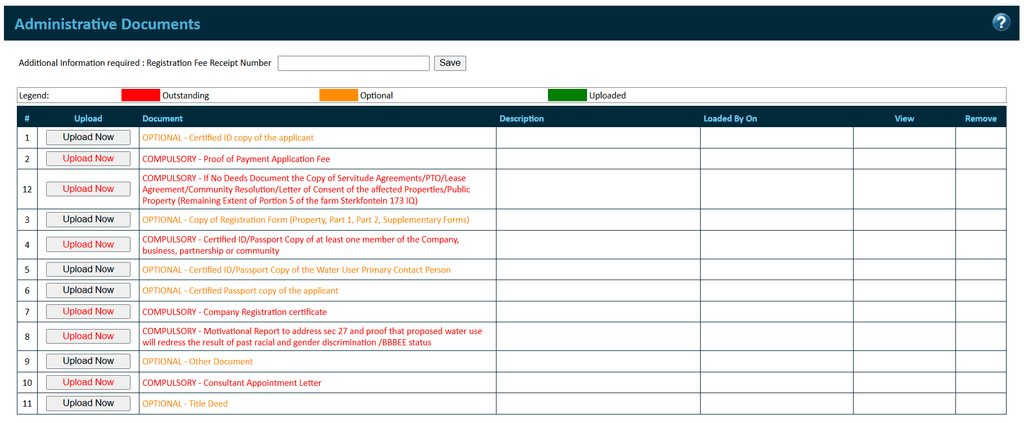
Applicants for water use licences are confronted on the Department of Water and Sanitation’s (DWS) online licensing system with a compulsory requirement for proof that the proposed water use will redress past racial and gender discrimination before their applications can proceed. AfriForum says the wording creates what seems to be an administrative gateway that is not provided for in the National Water Act 36 of 1998.
DWS’s Electronic Water Use Licence Application and Authorisation System (e-WULAAS) lists as compulsory a document described as a “Motivational Report to address section 27 and proof that proposed water use will redress the result of past racial and gender discrimination / BBBEE status”. An applicant cannot proceed with the application process without submitting a document under this requirement.
According to Marais de Vaal, AfriForum’s Advisor for Environmental Affairs, section 27 of the National Water Act requires the responsible authority to consider all relevant factors together when deciding whether a water use licence should be issued. These include the need to redress past racial and gender discrimination, but also existing lawful water uses, the efficient and beneficial use of water in the public interest, socio-economic consequences, the effect of the proposed use on the water resource and investments already made by the applicant.
The Act does not establish these factors as a checklist of separate hurdles that applicants must clear one after another. Nor does it identify redress as a gateway that must first be satisfied before an application can be considered on its merits. The weight attached to individual factors may differ according to the circumstances of each application and should therefore be assessed in context.
“A mechanical application of the redress consideration could produce absurd and harmful outcomes. A productive business may, for example, use water efficiently, employ hundreds of people, make a substantial contribution to the local economy and pose little risk to the water resource. If its application cannot even proceed because it cannot prove that the proposed water use itself will achieve a particular racial redress outcome, the consequences could include lost investment, business closures and job losses, while the other factors that section 27 requires DWS to consider are never properly evaluated,” explains De Vaal.
AfriForum has therefore asked the Minister of Water and Sanitation, Pemmy Majodina, to explain whether DWS intends the compulsory “proof of redress” requirement to operate as a threshold for submitting or considering a water use licence application. The organisation has also asked DWS to explain the legal basis for specifically including B-BBEE status in this compulsory requirement, since B-BBEE status is not itself listed as a factor in section 27.
A similar concern was raised by AfriForum in 2023. The fact that a comparable requirement again appears on DWS’s licensing system is especially troubling because lawful water use is fundamental to agriculture, industry, mining and many other productive activities.
“Administrative licensing requirements should provide legal certainty, not create additional barriers that Parliament itself did not prescribe. If the executive elevates one statutory consideration that aligns with government’s transformation ideology into a gateway that applicants must pass before the rest of their application is even considered, it is ultimately the productive use of water, jobs, investment and economic growth that will suffer,” concludes De Vaal.
AfriForum will continue to challenge administrative requirements that exceed the law and unnecessarily restrict the productive use of the country’s scarce water resources. Those who want to support AfriForum’s work to promote accountable water governance can visit www.afriforum.co.za.