
Stock theft statistics give a distorted picture of the real extent of the problem
AfriForum questions the accuracy of the stock theft statistics that the South African Police Service (SAPS) recently released for the third quarter of 2025/2026. The civil rights organisation argues that the statistics do not reflect the full extent of farmers’ experiences and that they, together with the foot-and-mouth disease (FMD) pandemic, are resulting in a full-scale disaster in the agricultural industry. AfriForum is therefore calling for the strengthening of Stock Theft Units and more effective implementation of anti-corruption mechanisms.
According to the latest SAPS crime statistics released in February, a 9,6% decrease was recorded in the number of stock theft cases reported for October to December 2025 compared to the corresponding period in 2024.
However, when comparing the statistics of the second and third quarters of 2025/2026, it shows an increase in the number of reported stock theft cases. For the period from July to September 2025, a total of 6 220 cases were reported countrywide, compared to 6 295 cases for the three months from October to December 2025. This signifies a 1,2% increase of 75 stock theft cases.
According to Hennie Bekker, AfriForum’s District Coordinator for the Mpumalanga Highveld, it may appear on the surface that the incidence of stock theft is decreasing, but if these consecutive quarters are compared with each other, the picture is different from what the SAPS is painting. He maintains that the apparent decrease in stock theft does not necessarily reflect reality and that farmers’ growing distrust in the SAPS’ Stock Theft Units is leading to lower reporting of this crime.
Stock Theft Units: The lack of resources and the prevalence of corruption
“The theft, illegal sale, or slaughter of large numbers of livestock continues. However, this is not always being reported to the Stock Theft Units because farmers, due to serious resource shortages and allegations of corruption in these units, have lost confidence in the value of reporting and the successful resolution and prosecution of these crimes,” explains Bekker.
The involvement of SAPS members in stock theft raises further concerns, says Bekker. In one case, Constable Siyabonga Cindi of the Standerton Stock Theft Unit was arrested in August 2025 and appeared in court on 2 September on a charge of stock theft worth approximately R450 000. He will appear in court again later this week (Thursday 12 March) after being implicated in further incidents of stock theft. Cindi remains in custody in the meantime but is expected to apply for bail during this week’s court appearance.
In addition to the alleged involvement of police officers in stock theft, the effectiveness of Stock Theft Units is seriously hampered by a shortage of vehicles and the vast areas that units serve. According to Bekker, this leads to Stock Theft Units sometimes not being able to reach crime scenes in a timely manner, which also hinders the preservation of a crime scene, the collection of evidence and eventual prosecution.
Bekker emphasises that a mass slaughter of sheep outside Standerton on 28 February is evidence of how the lack of resources in stock theft units hampers the handling of this crime. In this case, a farmer lost more than 40 sheep. Apart from four sheep that were stolen, the rest of this flock were slaughtered and left at the scene. At that stage, the local Stock Theft Unit in Standerton’s only available vehicle was already involved at another crime scene near Balfour.
This lack of resources forced the farmer to move the masses of meat on the scene himself. Later, Bekker visited the scene and observed a pair of pliers, likely used in the crime, lying in the grass. However, the scene was completely disturbed at that stage, which adversely affected the collection of evidence. AfriForum, however, approached the neighbouring Stock Theft Unit in Bethal to collect the available evidence.
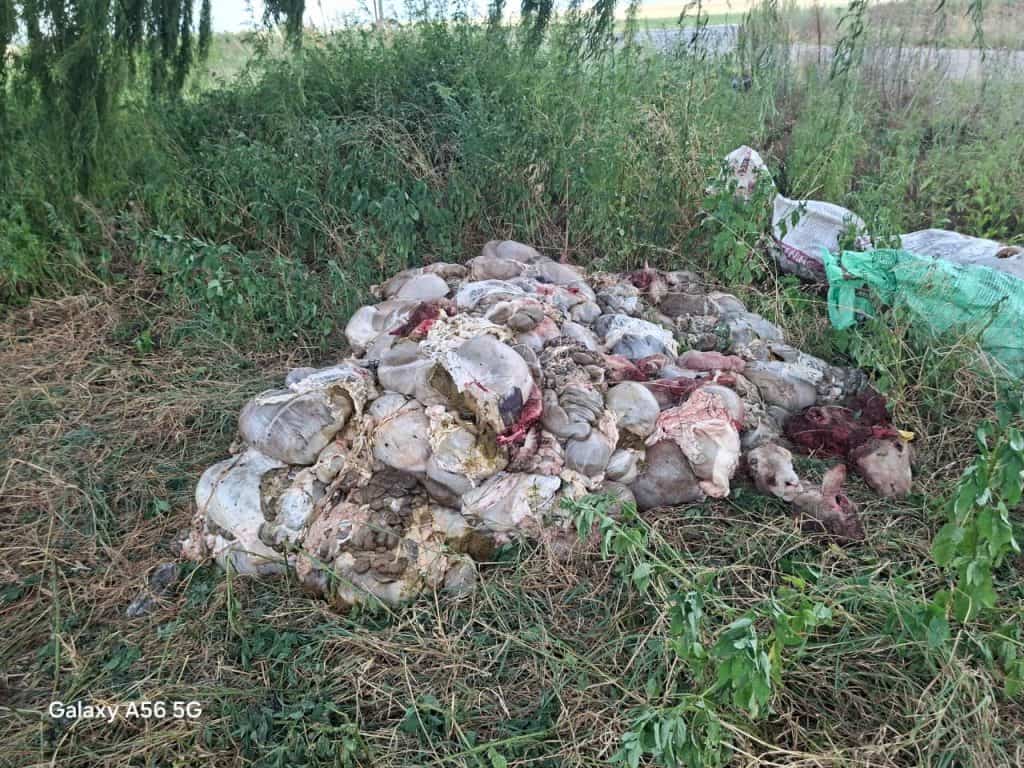
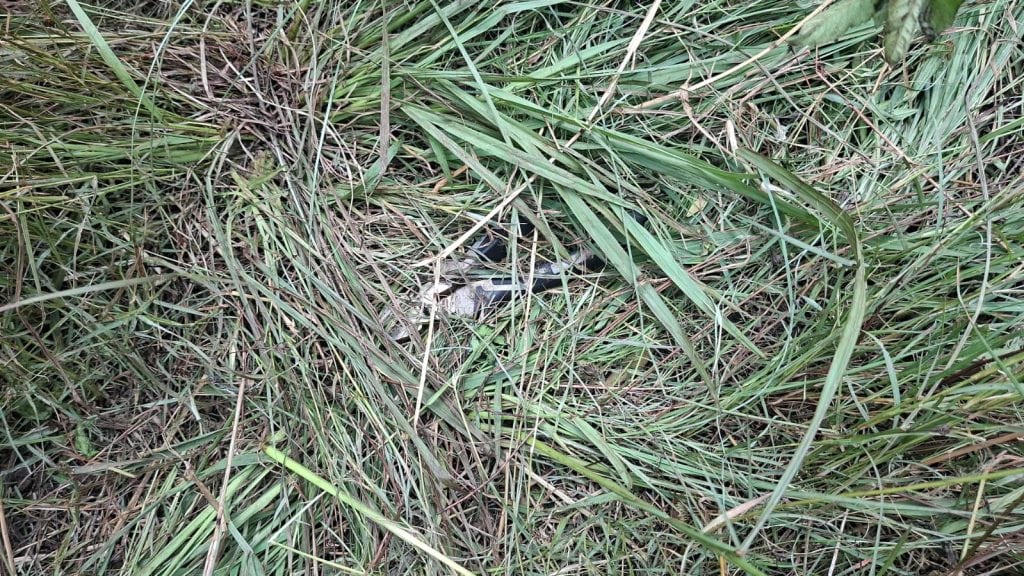
A mass slaughter of sheep outside Standerton and a pair of pliers found on the scene.
Collaboration yields results
According to Bekker, both above-mentioned cases in the Standerton Stock Theft Unit’s area demonstrate the critical challenges that farmers face every day in terms of stock theft. “It also shows that good collaboration between farmers, organisations such as AfriForum, agricultural organisations and the SAPS’ Stock Theft Units can achieve results,” emphasises Bekker.
In one recent case that took place outside Bethal in February, good collaboration between the SAPS’ Bethal Stock Theft Unit, the Bethal Community Policing Forum and AfriForum led to the arrest of four suspected stock thieves, the recovery of 11 stolen sheep and the confiscation of a vehicle used in the commission of a crime.
AfriForum began offering training on combating stock theft in June last year. It was put together to empower farmers and security structures in rural communities with information on stock thefts and covers issues such as the inspection of stock handling documents and the reading of branding marks. Several successes have already followed this training, including the case where nearly R900 000 worth of stolen livestock was recovered in the Hendrina area in Mpumalanga, thanks to AfriForum.
“These successes show that together we can make a positive difference, but that the SAPS will need to do more to empower Stock Theft Units. Resources must be expanded and corruption eradicated to restore public trust. Only when these problems are eliminated will a real decrease in stock theft cases be noticed,” concludes Bekker.