Kallie Kriel testifies before Khampepe Commission: “Political interference prevents ANC leaders from being prosecuted for pre-1994 acts of terror”
Soundbite: Kallie Kriel (English)
Soundbite: Kallie Kriel (Afrikaans)
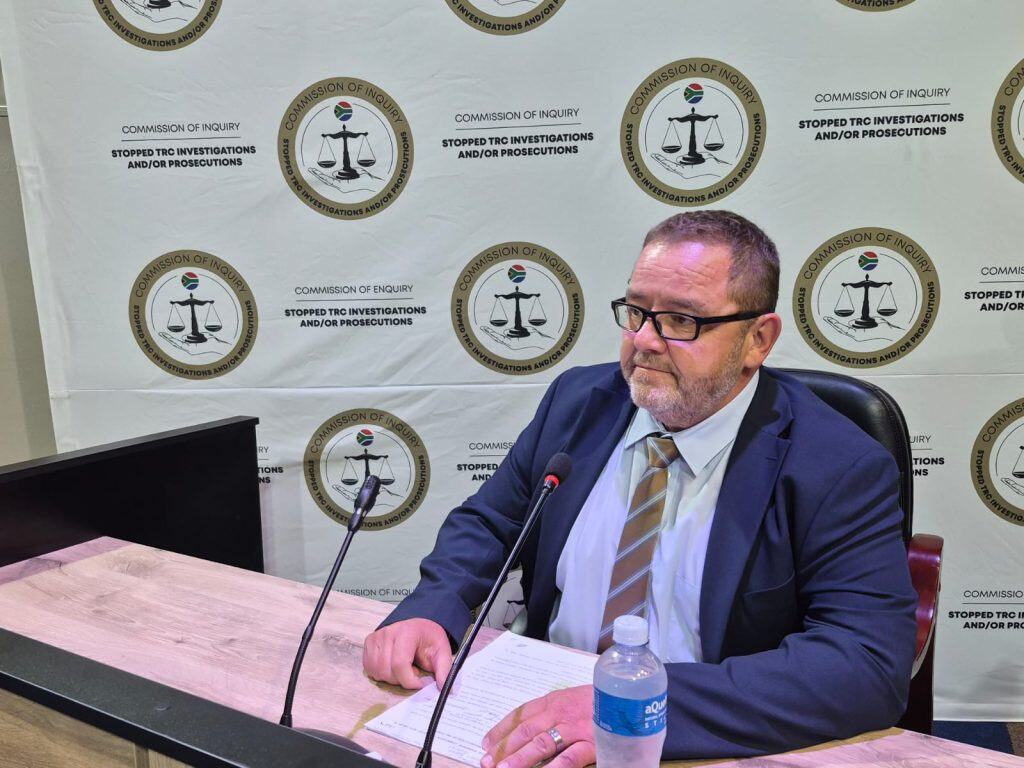
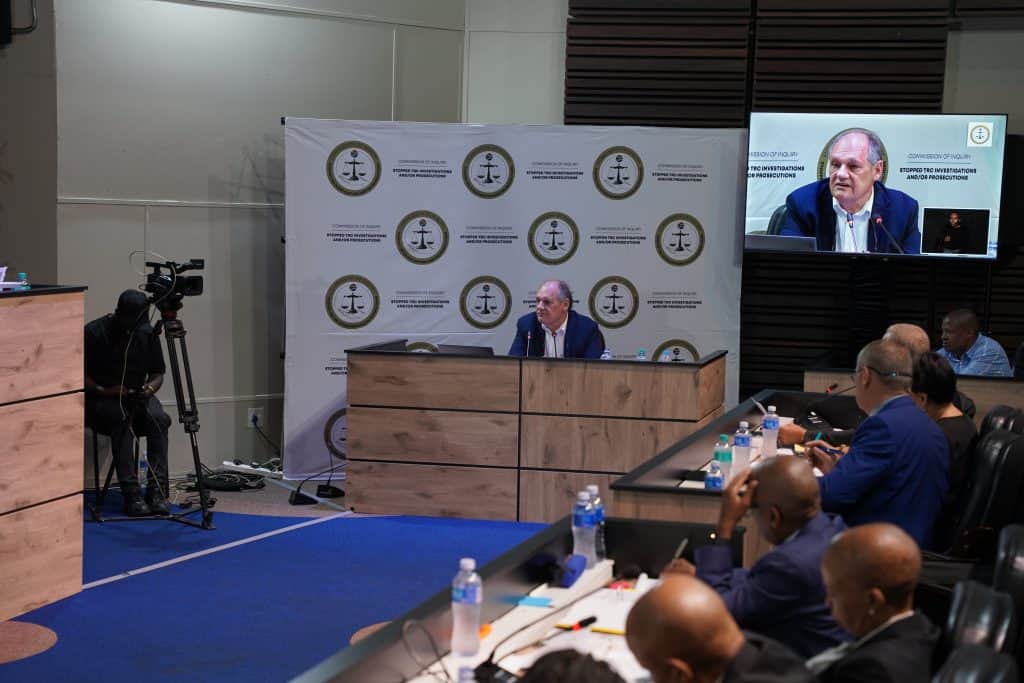
In his testimony before the Khampepe Commission today, Kallie Kriel, CEO of AfriForum, argued that political interference prevents the investigation or prosecution of ANC leaders who were not granted amnesty for gross human rights violations during the previous dispensation.
During his testimony, Kriel made a plea for equality before the law. He pointed out that either all those guilty of gross human rights violations during the previous dispensation, regardless of their political affiliation, should be prosecuted, or no prosecutions should take place. Kriel pointed out that the National Prosecuting Authority (NPA) is currently only prosecuting members of the former security forces, while the ANC leaders and others who targeted innocent civilians in acts of terror, such as landmine attacks and bomb explosions, continue to get away with it.
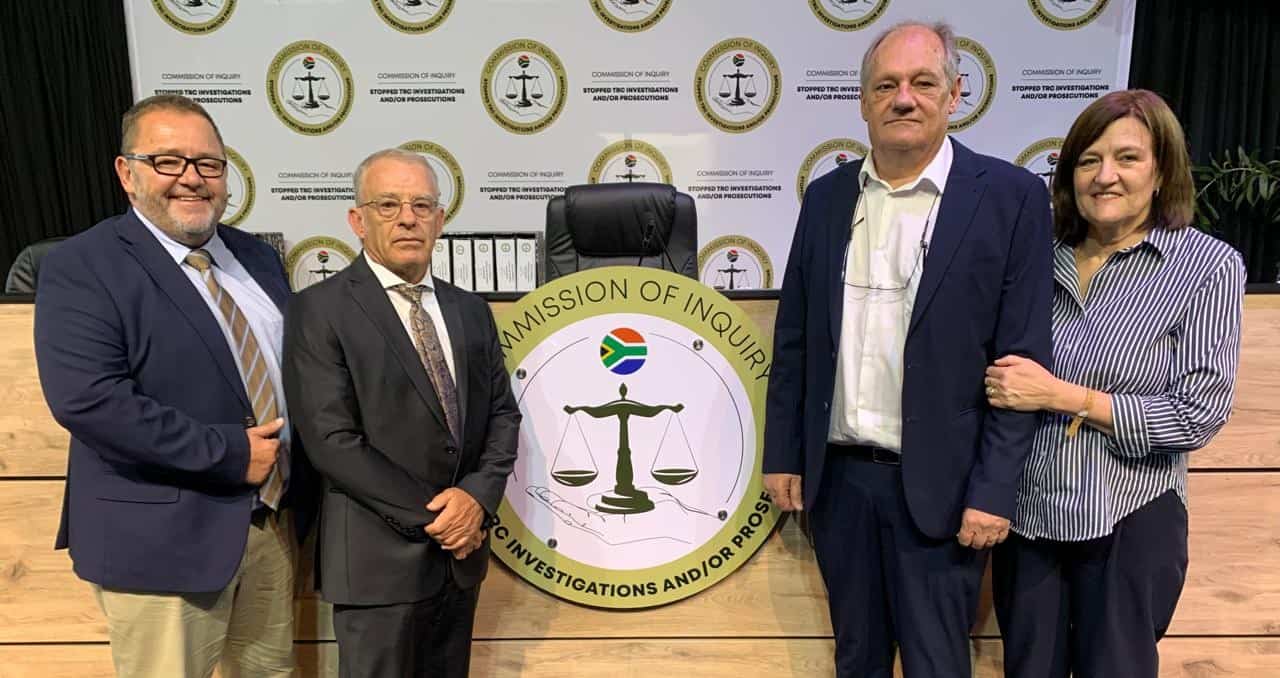
The Khampepe Commission was established after pressure from, among others, the family of the Cradock-4. It aims to investigate why individuals responsible for political crimes during the apartheid years and who did not receive amnesty escaped prosecution. According to AfriForum, the Khampepe Commission’s mandate also applies to ANC crimes since the Truth and Reconciliation Commission (TRC) at the time found that the ANC was responsible for a series of gross human rights violations, including bomb explosions and landmine attacks on civilians, as well as the fact that 37 ANC leaders did not receive amnesty for these human rights violations.
Advocate Gerrie Nel, Head of AfriForum’s Private Prosecution Unit, led the testimony of Kriel, as well as Cilliers van der Merwe, before the Khampepe Commission today. Van der Merwe’s father, Jaap, an innocent civilian, was murdered in cold blood near the Botswana border by ANC insurgents on 1 November 1978. The Van der Merwe family has given AfriForum a mandate to assist them before the Khampepe Commission.
Cilliers van der Merwe testified that his late mother and their family could not find closure because his father’s remains have yet to be located. The surviving suspect in the murder, who at the time used the pseudonym John Msibi, did not apply for amnesty at the TRC and is still alive. His identity is known to the authorities. The Khampepe Commission was asked to determine why Van der Merwe’s alleged killer was not prosecuted despite the evidence against him.
Jaap van der Merwe was murdered when he offered a ride to ANC insurgents who pretended to be hitchhikers. One ANC insurgent shot Van der Merwe in the back for no reason, and after he fell forward, turned him around and shot him in the face. An ANC member later confirmed these events and the names of the suspects. The telescope from Van der Merwe’s hunting rifle, which was stolen during the attack, was also later found in an ANC weapons cache. The TRC described the murder as the handiwork of ANC members.
During his testimony, Kriel also specifically requested the Commission to get answers about why no ANC leader was prosecuted for the murder of Kobie, the wife of Dirk van Eck, and their two children, Nelmari (8) and Nasie (2). Kobie, Nelmari and Nasie were killed in an ANC landmine attack in December 1985. This landmine attack was part of the ANC’s strategy adopted in June 1985 in Kabwe, whereby it was decided to also target civilians through, among other things, a landmine campaign called Operation Cetshwayo. In 2007, Van Eck made a request to AfriForum to assist in ensuring justice for these murders. However, the NPA is currently only focusing on prosecuting members of the previous dispensation’s security forces and refuses to prosecute ANC members for their misdeeds.
During his testimony, Kriel pointed out to the Khampepe Commission that there is clear evidence of political interference within the NPA to protect ANC leaders from prosecution. For example, advocate Paul Fick SC, who was employed by the NPA before his retirement, indicated during a recent conversation with Kriel that he had been instructed by advocate Bulelani Ngcuka, the then National Director of Public Prosecutions (NDPP), not to investigate further the involvement of ANC leaders in the acts of terror. The dockets were subsequently returned to the South African Police Service (SAPS) without any prosecution.
Colonel Tollie Vreugdenburg, a retired NPA investigator who was involved in the investigation into the Van der Merwe murder at the time, also confirmed to Kriel that advocate Chris Macadam, a senior member of the NPA, had shown no appetite to investigate ANC members.
Advocate Vusi Pikoli, former NDPP, also indicated in an affidavit in support of the families of anti-apartheid activists’ case that there was political interference in the decision not prosecute cases referred to the NPA by the TRC for further investigation and prosecution. This includes cases against ANC leaders.
Background
The TRC stated in its final report: “[T]he Commission found the ANC to be responsible for a range of gross human rights violations arising out of unplanned operations; the bombing of public buildings, restaurants, hotels and bars; the landmine campaign in the northern and northeastern parts of South Africa.”
The infiltration of ANC members from the Botswana border that led to Van der Merwe’s death took place on the orders of senior ANC leadership. The landmine attacks of which the TRC found the ANC guilty also followed a decision taken by ANC leaders in June 1985 at the organisation’s national conference in Kabwe, Zambia. At this meeting it was determined that the distinction between hard and soft targets should disappear and that attacks would also be carried out by means of landmine attacks as part of the ANC’s landmine campaign, known as Operation Cetshwayo.
The above decisions and their implementation are in violation of Protocol I of the Geneva Convention, which expressly prohibits the targeting of civilians and the use of methods such as landmine attacks that do not distinguish between civilian and military targets. The attacks took place even though the ANC had already signed this protocol in 1980.
After the Kabwe Conference, the majority of the ANC’s acts of terror targeted civilians. The ANC and its allies were responsible for hundreds of murders of civilians, including approximately 700 necklacings (in which a burning tire was placed around the victim’s neck), approximately 400 other live burnings and almost 250 murders due to bomb explosions and shootings.
On several occasions, the ANC has mentioned many of the acts of terror for which they were responsible in their publications, such as Sechaba and Mayibuye.