Court blocks Eskom and Nersa’s R54 billion settlement, affirms public participation rights
The Pretoria High Court yesterday has rejected Eskom and the National Energy Regulator of South Africa (Nersa)’s attempt to settle the power supplier’s tariff dispute behind closed doors. This comes after a proposed R54 billion settlement between the two entities sought to correct an error in Eskom’s allowable revenue determination without the proposed investigations, proper public participation, or referral back to Nersa. The court reviewed and set aside Nersa’s original revenue decision and refused to make the settlement agreement an order of court.
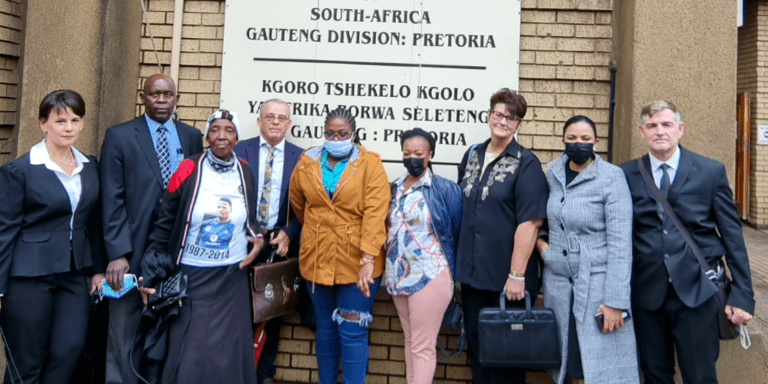
AfriForum intervened in this matter in October after Eskom’s original court application for a review of Nersa’s decision regarding Eskom’s Multi-Year Price Determination (MYPD) tariff application was abruptly converted into a settlement agreement. The settlement would have allowed Eskom to recover approximately R54 billion from electricity consumers through substantial tariff increases, without proper investigation or meaningful public participation.
In its judgment, the court found that Nersa’s revenue decision was unlawful, irrational and based on material calculation errors. Importantly, the court rejected the notion that Eskom and Nersa could correct these errors through a negotiated compromise that bypasses public scrutiny. The court confirmed that electricity tariff decisions affect all South Africans and that transparency and public participation are non-negotiable components of lawful regulation.
AfriForum placed Nersa’s own reasoning squarely before the court, including Nersa’s admission that one of the perceived advantages of the settlement was that it would bind the parties and avoid the details being aired in open court, thereby limiting further scrutiny and the possibility of a far-reaching court order. The court expressly criticised this approach, finding that it is contrary to public policy, constitutional principles and the statutory framework governing electricity regulation.
“This judgment confirms that Nersa cannot quietly negotiate away the rights of electricity consumers in order to shield itself from accountability,” says Morné Mostert, Manager for Local Government Affairs at AfriForum. “The court made it clear that convenience cannot justify secret deals that would saddle the public with billions in additional costs.”
The court further ordered that the matter be referred back to Nersa for reconsideration, with due regard to proper methodology and written submissions, and emphasised that the absence of public participation in the settlement process was fundamentally flawed. AfriForum and the Minerals Council of South Africa were found to have had a direct and substantial interest in the matter, were entitled to intervene and have done so successfully. Eskom and Nersa have subsequently been ordered to pay AfriForum’s and the Minerals Council of South Africa’s legal costs.
“This is a landmark judgment for electricity users,” Mostert adds. “It sends a clear message that Nersa and Eskom are not above the law, and that decisions affecting electricity tariffs must be made transparently, lawfully and with full public participation. AfriForum will continue to act as a watchdog to ensure that South Africans are not forced to pay the price for regulatory failure.”
The judgment delivered yesterday (21 December 2025) was sent electronically to AfriForum’s legal team. However, one page is missing from the judgment order. AfriForum has already requested the court clerk to urgently provide AfriForum with the full judgment. As soon as it is received, the full document will also be made available to the media.