AfriForum alerts UN to threats to minority rights in SA
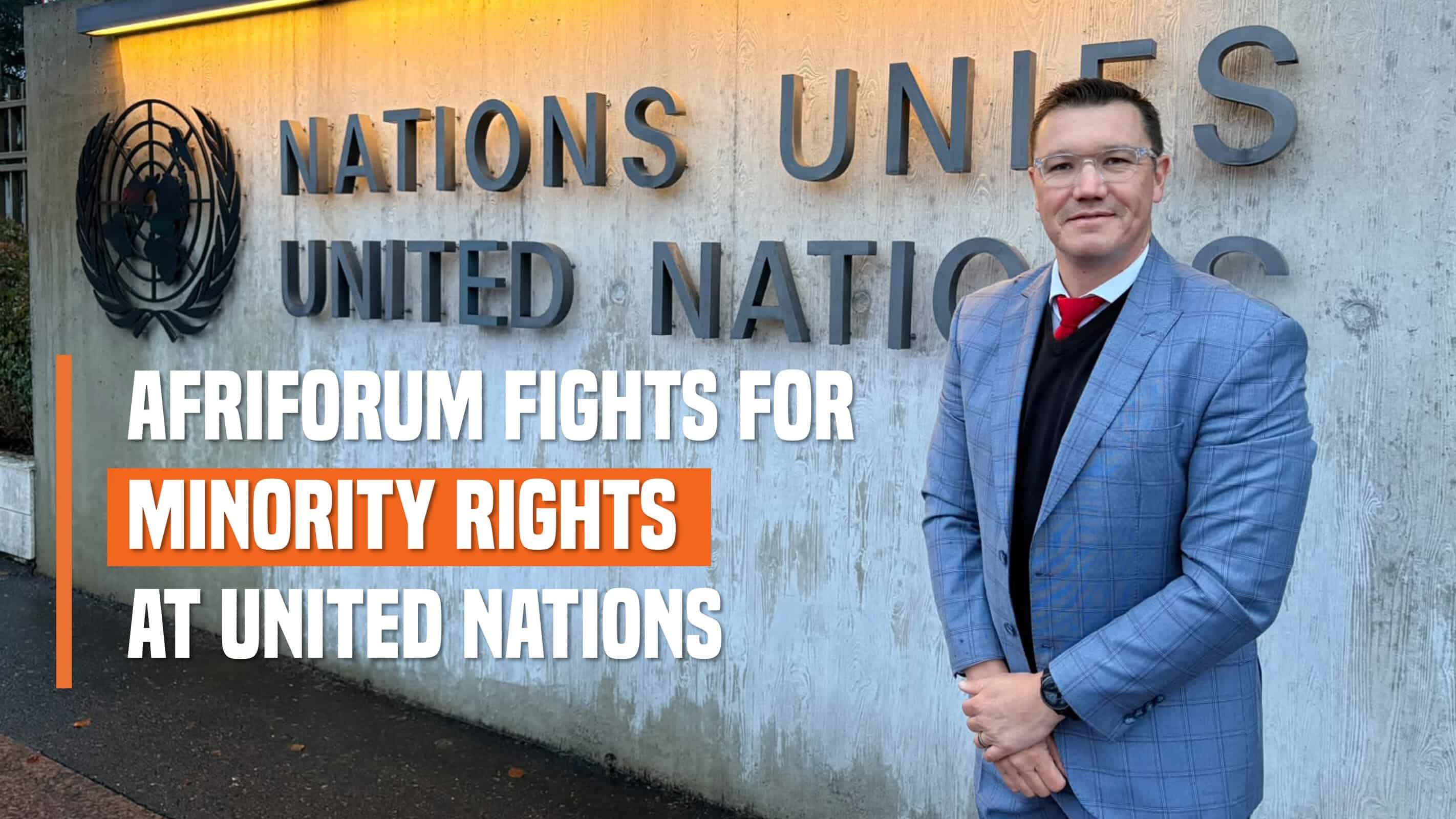
Today, in Geneva, Switzerland, AfriForum alerted the United Nations (UN) Forum on Minority Issues to the growing threats to minority rights in South Africa. In its submission, the organisation emphasised, among other things, that – despite the protection the Constitution is intended to provide – the language and cultural rights of local minorities are, in practice, being reduced to mere “paper rights” due to race-based legislation and an ineffective, often hostile, government.
However, in its reply to AfriForum’s submission, the South African government argued that the persecution of Afrikaners is a “false narrative” and that minorities are, in fact, being “empowered” and “protected”.
The Forum’s 19th session is taking place today and tomorrow, focusing on the advancement of minority rights through regional initiatives and cooperation. In addition to an oral submission, AfriForum also presented a report to the forum today titled “The world must know 2026: Advancing minority rights and fostering intercultural relations and cooperation amid the persecution of minority communities.” Since 2020, AfriForum has held special consultative status with ECOSOC (the UN Economic and Social Council), which grants the organisation access to various UN human rights processes, including the Forum on Minority Issues.
Werner Human, AfriForum’s Deputy CEO, is attending the session. In his submission, he highlighted the ongoing and practical ways in which the rights of South African minorities are being threatened. Examples of these threats include: the discriminatory application of 145 race-based laws; the prevalence of hateful and violent political rhetoric directed at Afrikaners and other minorities; the disregard for farm attacks – along with the associated torture of victims – and the lack of political will to prioritise this unique type of crime; and the implementation of legislation seeking to expunge Afrikaans from public schools.
“The protection of minority rights is not determined by what the Constitution guarantees on paper, but rather by whether communities possess the freedom and capacity to exercise those rights,” explains Human. “The South African government’s response to AfriForum’s submission today argued that our constitutional democracy is anchored in the rule of law and that the Constitution provides for the protection of communities; however, it overlooks the fact that, in practice, the promises of the Constitution offer no guarantees for minorities, and that the daily experiences of minorities differ vastly from the intentions of the Constitution.”
Human maintains that the exercise of rights by various minority groups is currently under threat in South Africa. “The government’s denial of this threat will not change reality, and it certainly will not silence those who speak out about it. Moreover, the threat to the rights of minorities is not a fate that affects only Afrikaners; it also undermines the sustainable continued existence of all cultural communities in the country.”
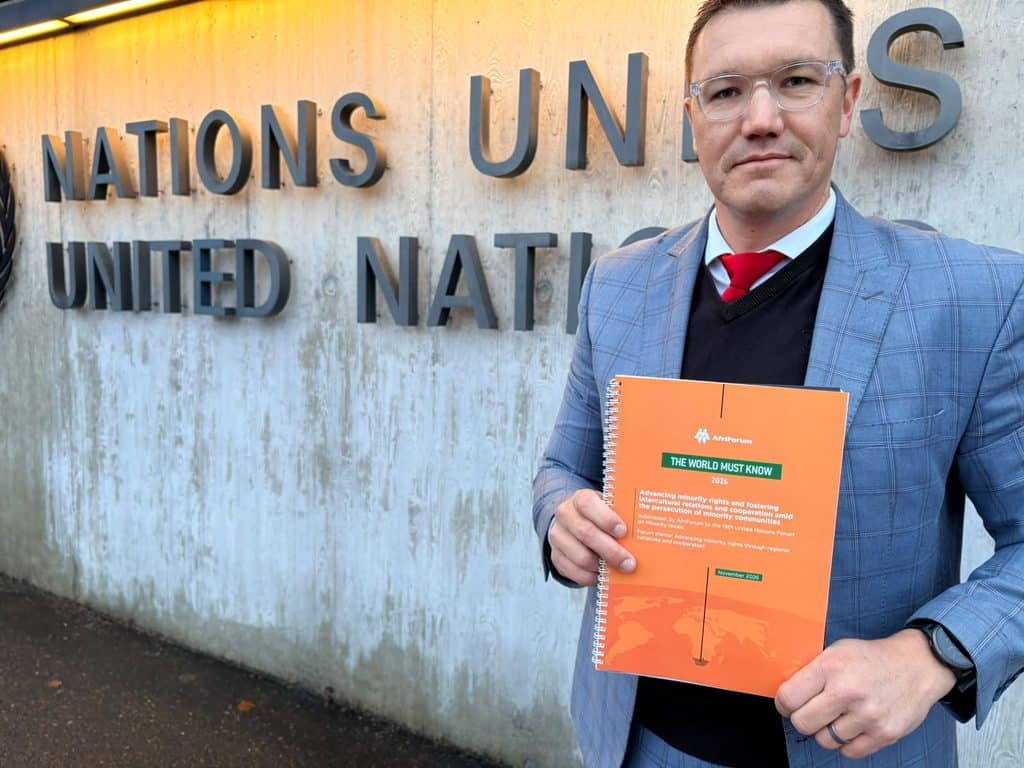
In the report that Human submitted to the Forum, the challenges faced by minorities in South Africa are detailed more extensively. It points out that Africa lacks a specific treaty specifically dedicated to protecting minority rights, that South Africans cannot approach the African Court directly, and that the operations of the Southern African Development Community (SADC) Tribunal have been suspended since 2011.
AfriForum asserts that the UN has a role to play and a responsibility to address the threats to minority rights. AfriForum has therefore recommended that:
- the UN calls on states to protect minority rights and independent community institutions;
- South Africa be granted direct access to the African Court, and the SADC Tribunal be reinstated;
- the African Commission strengthen its mandate regarding minority rights; and
- the UN should recognise and support voluntary cooperation and mutual recognition among cultural communities in South Africa.
However, Human emphasises that communities should not passively wait for relief. Consequently, minority communities in South Africa are increasingly taking responsibility themselves in instances where regional and national mechanisms fail. AfriForum’s collaboration with other cultural communities – focusing on agricultural development, the promotion of heritage, culture, and language, and the capacity of communities to ensure their own safety and future – serves as an example of this. The Cultural Communities Network, established in 2025 by AfriForum and more than 30 cultural communities, and which focuses on the realisation of cultural rights and socio-economic development, also demonstrates how diverse cultural communities in the country seek to foster cooperation at the grassroots level.