AfriForum, Solidarity and Solidarity Helping Hand Look Beyond Bully and Victim in Anti-Bullying Campaign
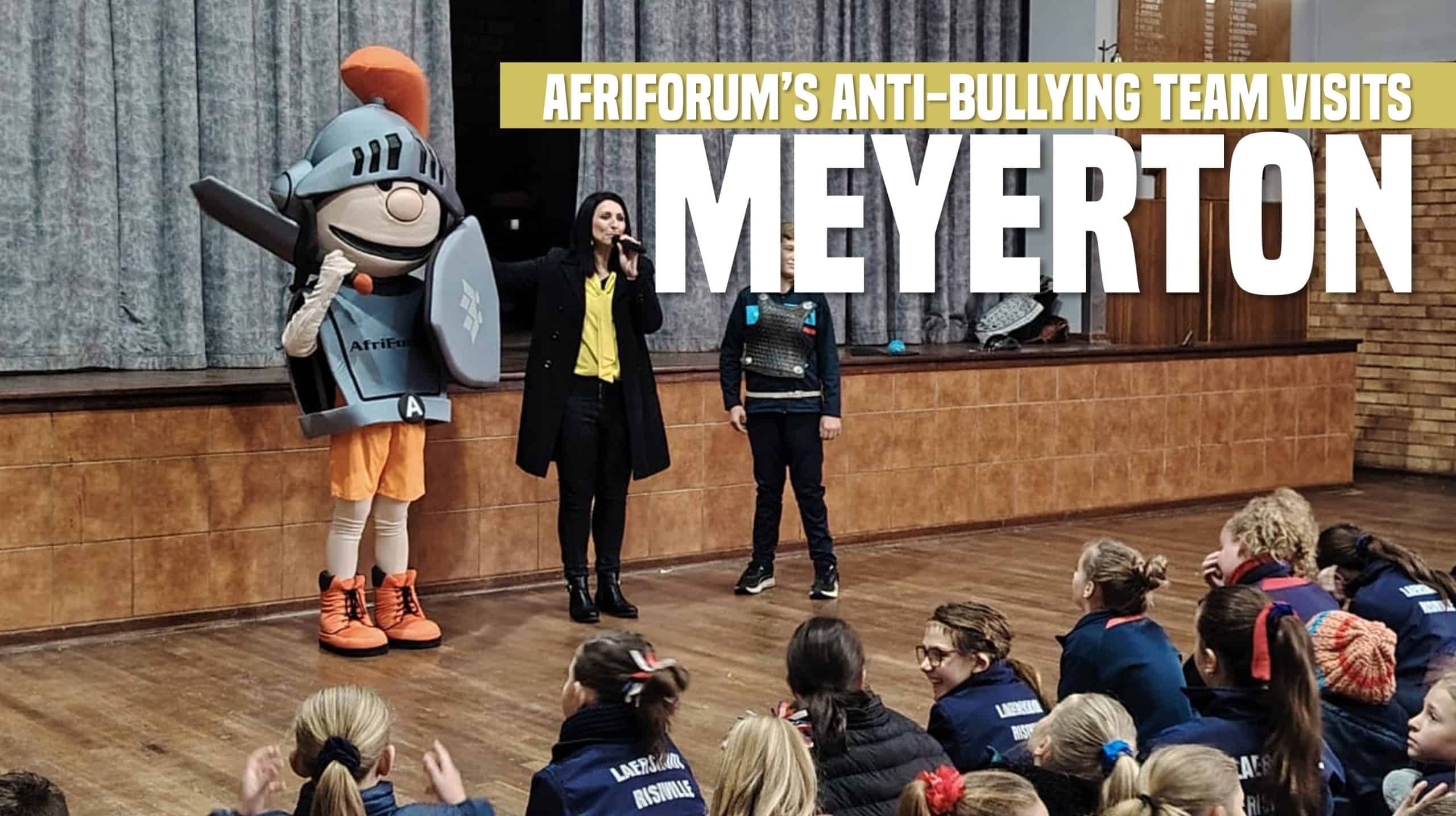
The line between bully and victim is not always clear. Research conducted among 460 high school learners in the Tshwane Metro district found that 42,39% of respondents could be classified as both bullies and victims. It is precisely this greater complexity of bullying behaviour that AfriForum’s Anti-Bullying Team, Solidarity and Solidarity Helping Hand discussed with learners during a joint visit to Laerskool Risiville and Laerskool Voorwaarts in Meyerton, Gauteng, on 13 August.
Research also offers insight into what may lie behind this overlap. In a 2024 follow-up study, researchers found that some learners who are themselves bullied direct their frustration and anger towards other learners. Some respondents described bullying someone who was weaker than themselves, while others used aggression as a way of protecting themselves or attempting to regain lost status among their peers. The findings show how victimisation and bullying behaviour can, in some cases, become part of the same cycle.
These findings correspond with the approach followed by AfriForum, Solidarity and Solidarity Helping Hand during the school visits: protect the victim, set boundaries around the behaviour, but do not write off the child behind the behaviour.
Mari-Louise Erasmus, Presenter of AfriForum’s Anti-Bullying Programme, emphasises that helping the bully does not mean accepting or excusing the behaviour. “We must be able to do two things simultaneously: We must protect the child who is being hurt and help the child who is hurting others to understand why their behaviour is wrong and how to change it. Discipline must set clear boundaries, but it should also be aimed at supporting all parties involved,” she explains.
Another local study, published in 2024 in the international academic journal Scientific Reports and involving 769 high school learners in Northwest, found that adverse childhood experiences and peer influence are important predictors of bullying behaviour. The study found associations between bullying behaviour and various adverse childhood experiences, while peer influence emerged as an important predictor. Understanding the drivers of bullying behaviour, however, does not mean excusing the behaviour. A child’s circumstances do not justify humiliating, excluding or hurting others. The behaviour must be addressed firmly, while the child is taught to take responsibility for his or her actions.
According to Erasmus, it is important for children to understand the difference between holding someone accountable and labelling someone as a “bad or naughty child”. “We can tell a child: ‘What you did is not acceptable,’ without saying: ‘You are a naughty or horrible child.’ Children need to learn that inappropriate behaviour can be addressed without writing them off as a person.”
The message to learners and teachers is simple: Bullying behaviour must be stopped, but the child behind the behaviour should not be written off. The Anti-Bullying Campaign therefore emphasises the importance of values such as responsibility, empathy, respect and self-control. When learners show empathy, schools set clear boundaries and support is provided, the child who hurts others is given the opportunity to accept responsibility, learn from his or her actions and develop new, positive ways of interacting with others.
AfriForum’s Anti-Bullying Campaign equips schools, parents and learners with practical knowledge to recognise and address bullying and cyberbullying behaviour at an early stage and to establish a culture of mutual respect. The programme focuses on the role of the entire school community in protecting children, promoting responsibility and reinforcing positive behaviour.
For more information about AfriForum’s Anti-Bullying Campaign and school presentations, please email onderwys@afriforum.co.za.