AfriForum and the AmaQwathi launch Nomakhosazana goat project, sign agreement
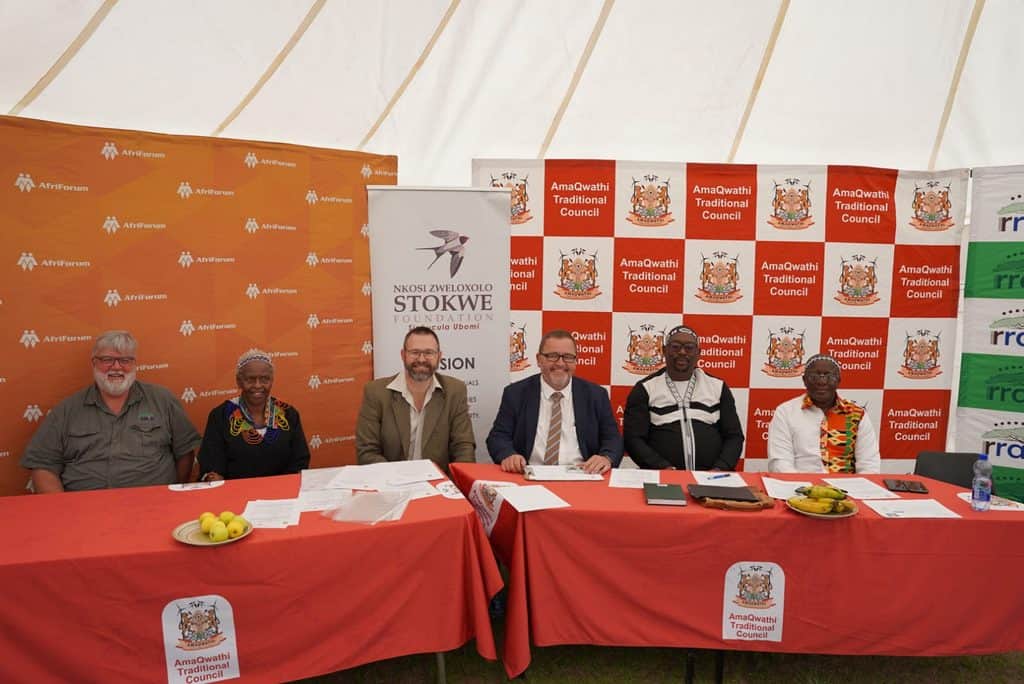
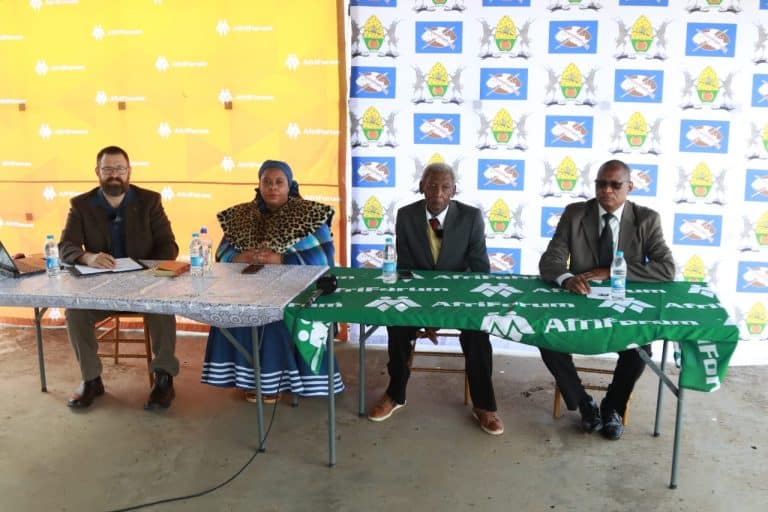
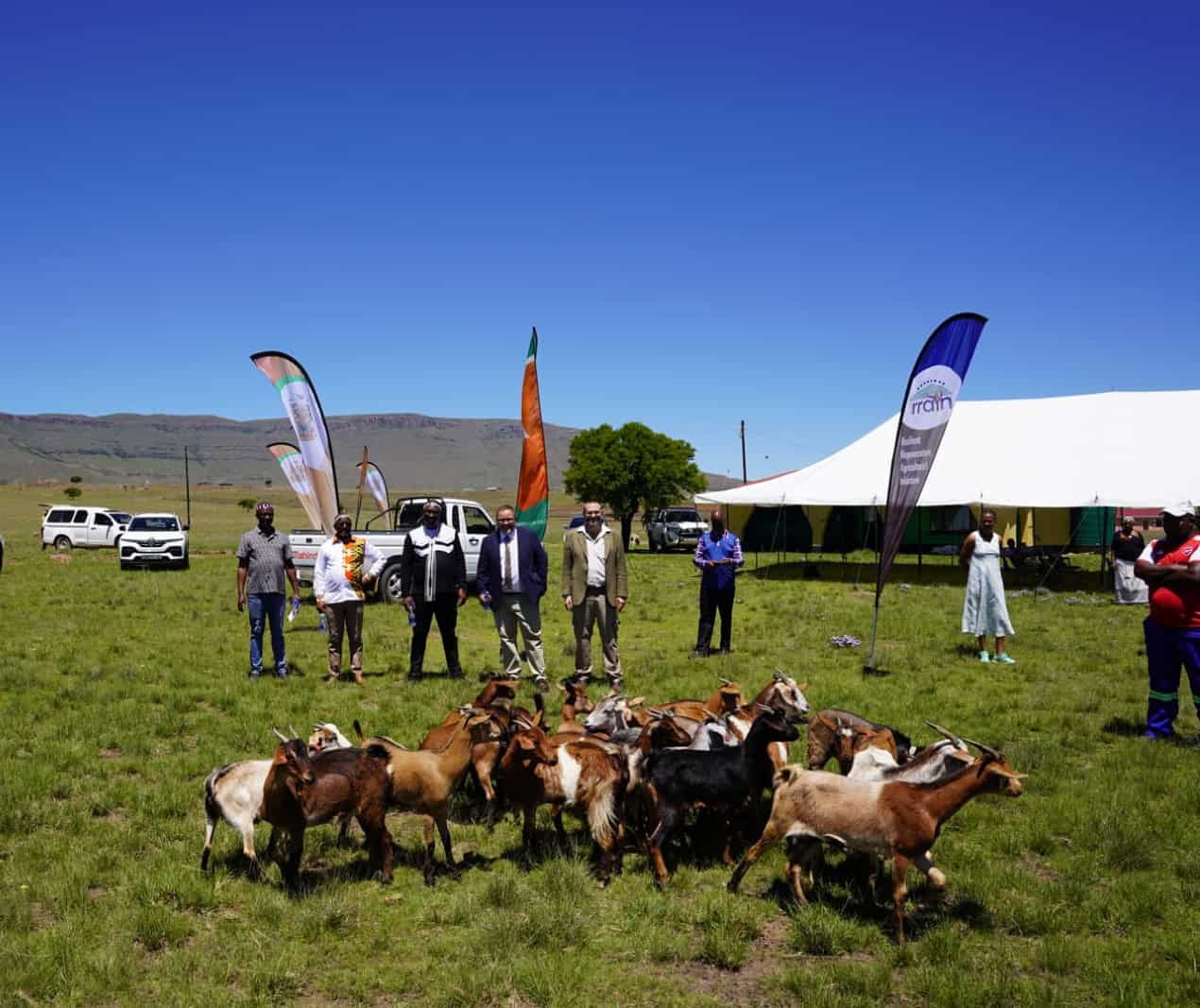
AfriForum and Nkosi Zweloxolo Stokwe of the AmaQwathi cultural community today launched the Nomakhosazana Indigenous Veld Goat Incubation Project on the Princess Emma Sandile Farm in the Cala area of the Eastern Cape. The project comprises a starter herd of 21 Nguni indigenous veld goats and training in goat-farming for local small-scale farmers, Nkosi Zweloxolo and his team. The aim of this joint agricultural development project is to equip local small-scale farmers with the knowledge and skills to develop subsistence and small-scale farming into profitable enterprises. It will also establish a goat herd that will, over time, grow into a sustainable goat-farming operation and supply goats with good genetics for further grassroots development projects. AfriForum and the AmaQwathi also signed a mutual recognition and cooperation agreement at the event.
“The protection and development of cultural identity, and the improvement of the socio-economic circumstances of the AmaQwathi Traditional Community, are very important to me,” says Nkosi Zweloxolo. “I am therefore excited about the potential for positive economic impact from this joint project. We believe that the transfer of knowledge and skills, together with better genetics, will improve the living conditions of our communities in the longer term. There is no quick fix for economic development. It is built step by step, and today we have taken another important step. We are grateful for partners and co-workers such as AfriForum who work with us to make our communities more self-sufficient, and it was a privilege to formalise our relationship through an agreement today. We look forward to the successful implementation of this project, as well as other joint initiatives for the benefit of community members at grassroots level,” he adds.
“There are differences between cultural communities, but we choose to collaborate on matters we agree on, to make a positive impact at grassroots level. It is precisely when different cultural communities work together that mutual understanding and trust are built. It is a great privilege for AfriForum to be a partner of the AmaQwathi and we are thankful for BKB in Khowa, whose support helped make this project possible. It is proof that a beautiful future for the children of this country is possible when cultural communities collaborate on the basis of mutual recognition and respect, enabling communities to improve their living conditions and become more self-sufficient,” says Kallie Kriel, Chief Executive Officer of AfriForum.
“A network of cultural communities that mutually recognise, support and work with one another is growing steadily stronger. We are grateful that, alongside partners who focus on shared interests, we can also be fellow believers. Communities and their leaders recognise that our destinies are bound together and that we share values, and this makes cooperation on a healthy foundation possible,” says Barend Uys, Head of Intercultural relations and cooperation at AfriForum.
“We are very proud that the does for this project were supplied by Kgosi Moroka Farming of Thaba’Nchu. This speaks to the success of that joint project, and to the hard work and dedication of Prince Motlotlegi and his team on the farm Blijdskap,” says Nantes Kelder, National Project Coordinator for Intercultural relations and cooperation at AfriForum.
AfriForum and Nkosi Zweloxolo began collaborating in November 2025, when seedling growing training was provided to Mtingwevu community members in cooperation with the Adopt-A-Village Rural Food Security Initiative. AfriForum is involved in both this and other agricultural development projects through the Resilient Regenerative Agricultural Initiative (RRAIN), an agricultural development incubator that is a joint initiative of AfriForum and Saai.
“We named this project after my sister, Princess Nomakhosazana Stokwe, who worked hard to make it a reality. We honour her memory,” concludes Nkosi Zweloxolo.