AfriForum demands that municipal officials be held personally responsible after AG confirms collapse of water services
AfriForum demands that municipal officials be held personally responsible for the collapse of water services that was confirmed yesterday in a damning briefing by the Auditor-General (AG). This demand forms part of the civil rights organisation’s five-point plan for the restoration of water services in the country.
The AG’s briefing, presented to the parliamentary portfolio committee for Water and Sanitation yesterday (2 December), confirms that South Africa’s water crisis is not caused by climate change or low rainfall, but by the systemic collapse of the country’s water supply system.
The report shows that while national entities, including the Department of Water and Sanitation (DWS) and seven water boards, received unqualified audits for the 2023/2024 financial year, the real crisis in water supply lies with municipalities where material non-compliance was identified in the audit opinion of 83% of Water Services Authorities (WSAs). More than half, or 75, of the 135 WSAs also received qualified, adverse or disclaimed audit opinions.
In addition, the AG found that material irregularities resulted in a total financial loss of R1,76 billion at DWS and the Water Trading Entity (R443,58 million), the Umngeni-uThukela Water Board (R145,25 million) and WSAs (R1,17 billion).
According to Lambert de Klerk, AfriForum’s Manager for Environmental Affairs, the AG’s findings point to much more than poor performance: “This is a governance disaster that impacts every household in the country. The AG has now confirmed what AfriForum has been warning about for more than a decade, namely that municipalities are the single biggest culprit in the water crisis. The country is not running out of water – local governments are simply failing to manage, treat and deliver it,” De Klerk continues.
Issues such as 59 municipalities spending R2,32 billion on water tankers in 2023/2024, of which R419 million was flagged as irregular expenditure, are particularly worrying, according to De Klerk. “AfriForum has repeatedly pointed to corruption in the use of water tankers, the emergence of the so-called ‘water mafias’ and the sabotage of water infrastructure with the aim of obtaining even more profit from water tanker contracts, and the findings of the AG’s submission confirm this growing crisis. Municipalities are literally rewarding failure. Rather than addressing leaks or maintaining the proper operation of water systems, they are channeling billions into tanker schemes, which provide opportunities for political patronage, intimidation and criminal activities,” says De Klerk.
The AG report also sets out the following shocking facts:
- More than a quarter (26%) of WSAs – municipalities responsible for providing access to water in terms of the Water Services Act – do not have a water services development plan (WSDP) as required by the law, and 6% of these authorities have not reviewed their WSDP for at least five years.
- Audit findings were recorded in 82% of infrastructure projects, while 56% of infrastructure projects were delayed by an average of 32 months. The longest project delays were reported in the Northern Cape, Limpopo and Mpumalanga, where delays of 49, 42 and 40 months were recorded, respectively.
- Maintenance spending sits at only 3% of asset value, while the benchmark is 8%.
- A total of 30 WSAs, of which 9 are located in the Northern Cape, have no maintenance plans for water infrastructure.
- DWS completed only 39% of planned maintenance of water infrastructure (including dams, canals and pumping stations) in 2023/2024.
- Water losses worth R14,89 billion were reported, mainly due to leakages at WSOs.
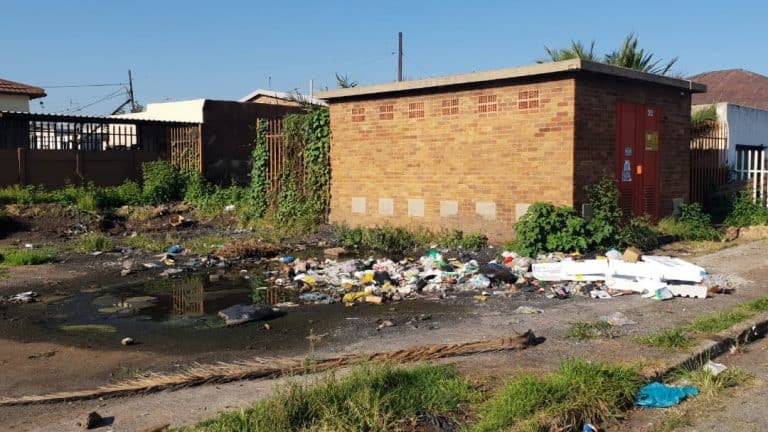
“The problems recorded at water services authorities do not indicate trivial or unavoidable errors and accidents. By diverting available funds to other projects, neglecting maintenance and appointing unqualified staff in critical positions, municipalities are fully responsible for the serious deterioration of water infrastructure,” explains De Klerk.
In light of the AG’s findings, AfriForum proposes a five-point plan for repairing the water supply crisis facing the country:
- Hold municipal officials personally liable
AfriForum insists that municipal officials should be held personally liable for failures that lead to pollution, financial losses and health risks. This can be done in accordance with Section 34 of the National Environmental Management Act (NEMA), Section 63 of the Water Services Act and the Municipal Finance Management Act (MFMA).
- Provincial and national intervention
The Minister of Water and Sanitation must use the tools available under Sections 62 and 63 of the Water Services Act in cases where municipalities fail in their duty and appoint alternative water service providers to take over the specific functions.
- Criminal prosecution
Municipal leaders responsible for ongoing effluent pollution, water contamination, and intentional failure to maintain infrastructure must face criminal charges.
- Immediate shift from tankering to infrastructure repair
The use of water tankers should only be used as an emergency measure, not as a source of income for politically connected contractors. Repairs to water infrastructure should instead be prioritised to reduce the demand for water tankers.
- Implement a national maintenance turnaround strategy
Finally, AfriForum insists that a turnaround strategy with a focus on maintenance be implemented at a national level. This should require municipalities to:
- conduct a full assessment to determine the condition of assets;
- develop and implement proper maintenance and refurbishment plans for water infrastructure; and
- allocate at least 8% of asset value for maintenance.